At the start of every year, the same urgency kicks in: "We need someone now." A resignation lands, a new project begins, a headcount is approved - and suddenly, we're back on the treadmill of reactive hiring. But what if 2026 is the year we stop doing that? Not long ago, I was speaking with the COO of a regional industrial group in Thailand. His team had just made two senior hires where both came with strong profiles, ticked the usual boxes and six months in, were underwhelming.

A system that only works ‘well enough’ today will be far out of its depth tomorrow, as the rest of the industry optimises for greater speed, efficiency, and customer service quality. Because digital transformation/enablement takes time, companies cannot afford to wait until they are noticeably falling behind in order to upgrade their systems and processes.
Explore some of the latest trends, best practices, and strategies that are shaping the future of Human Resources. Whether you're an HR professional or simply interested in the evolving landscape of the workforce, this webinar is for you. This webinar will explore FutureLog’s payroll transformation journey.
Advances in digital technology and artificial intelligence can significantly ease the strain on your accounting department, streamlining back office operations and opening the door to better, more in-depth and wide-ranging analysis of your company’s economic direction. Data-based simulations can integrate complex arrays of variables in order to highlight ripe areas of focus for your company, and can now do so more efficiently than ever.
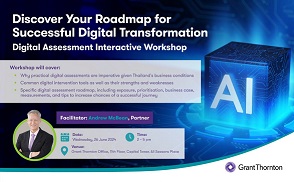
Discover your roadmap for successful digital transformation
Very few companies in Thailand will carry out Digital Transformation successfully at an enterprise-wide scale. Even if they did, they are typically powered by huge budgets, dedicated teams and multi-year timelines. All other companies must inject “digital” into their processes using a more pragmatic and tactical approach. When done properly this can rapidly unlock cost savings and create new and lucrative opportunities for revenue creation. Yet companies struggle either to start this journey or turn it in to demonstratable success.
How can your business address the challenges of an ageing population and a shrinking workforce?
Going public can dramatically increase a company’s funding as well as its prestige. But as we describe here, the process is highly regulated by Thai authorities, with complex requirements and no room for error.
From Shared Service Centres, to Assisted Captive and Virtual Captive solutions, to Full Outsourcing, we review the various ways that companies can transform non-core activities to increase their overall agility.
For business to succeed, trustworthy local connections are needed to navigate laws and regulations in the relevant area. Outsourcing provides the best access to the necessary expertise.
Remote work makes companies and individuals more vulnerable to phishing scams. This article shows you what to look out for.
As they strive to meet the extraordinary challenges of the day, business leaders must also consider how they will adapt to the post-COVID-19 landscape.
Business leaders must quickly adapt and redesign their operating models and technology platforms to stay afloat during the COVID-19 pandemic.
The consequences of the COVID-19 pandemic will be far-reaching. However, by working together, we can learn from this crisis and build a better future.
By empowering employees, eliminating waste, and improving processes, organisations can prosper in today’s rapidly changing landscape.
Companies must respond to evolving consumer expectations and demands with better supply chain and logistics management. Technology is the solution.