Across boardrooms and executive meetings this year, I’ve noticed something striking: executives are talking a lot about roles - but not enough about capability. The focus is almost always on vacancies - what's open, what’s urgent, and who can fill it. But in a market shaped by demographic shifts, emerging tech, and increasingly fluid career paths, the real risk isn’t an open role. It’s a critical capability gap - one you may not realise you have until it's too late.

At the start of every year, the same urgency kicks in: "We need someone now." A resignation lands, a new project begins, a headcount is approved - and suddenly, we're back on the treadmill of reactive hiring. But what if 2026 is the year we stop doing that? Not long ago, I was speaking with the COO of a regional industrial group in Thailand. His team had just made two senior hires where both came with strong profiles, ticked the usual boxes and six months in, were underwhelming.
As the year closes, leadership teams across Thailand are finalising their 2026 strategies - refining targets, outlining transformation plans, and setting bold growth ambitions. But amid all this planning, one critical question often gets overlooked: Are the people who will carry this strategy into 2026 the right ones to do it? In my recent conversations with CEOs and CHROs, the answers to this question are rarely clear. Many leaders think they’ve got the right team - but they haven’t pressure-tested that belief. The world is changing fast, and the leadership qualities required even two years ago may not match what’s needed next year.
In recent months, I’ve written about what it takes to create real momentum within organisations: how leadership, structure, process, and culture each play a role in determining whether the strategy translates into performance. But as we enter the final quarter of the year, I find myself reflecting on something even more fundamental.
Last month, we talked about structure, how the way you organise your business should serve your strategy, not the other way around. But there’s something even more invisible, yet equally critical, shaping whether strategy turns into real results. And that is culture.
Last month, I wrote about how the right leaders, those who truly move the needle, are rarely out there looking for jobs, but they are always listening for the right opportunity. Attracting such high-impact leaders is a powerful step forward, but it is only half the battle. Once those leaders join, the real question emerges: is your organisation designed to let them succeed?
In Thailand’s fast-moving business environment, one truth is quietly shaping the success of transformation and growth: the leaders who can truly move the needle, those who can drive change, inspire teams, and navigate complexity, are rarely the ones applying for roles. They’re not browsing job boards. They’re not polishing their resumes. They’re deep in the business of leading. But they are listening for the right opportunity, at the right moment, delivered by someone they trust.
Not long ago, in a meeting with a group of senior executives here in Bangkok, I noticed something interesting. While everyone was talking about Generative AI, the opportunities, the fears, the future, very few were talking about leadership. How will we, as executives, actually lead in a world transformed by AI? It struck me that while AI advancing at incredible speed, leadership thinking must move even faster. This is not just another business trend. It is a profound shift - one that challenges how we define value, build teams, and set strategy. Here are a few thoughts I wanted to share.
In May, we explored how leadership must evolve in Gen AI. This month, I want to shift our focus to something equally fundamental but often ignored in transformation conversations: process. It's not technology, platforms, or automation. It's just a simple, clear human process, the way work actually happens, from the ground up.
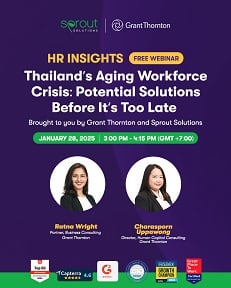
Thailand’s plummeting workforce is a multi-dimensional and critical crisis demanding immediate action from businesses.
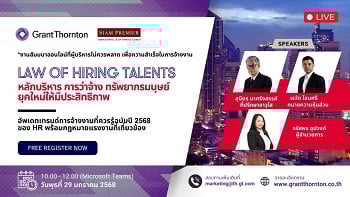
เปลี่ยนการจ้างงานที่เป็นเรื่องยาก มาอัพเดทความรู้ด้านการบริหารและการสรรหาว่าจ้างคนเก่ง พร้อมกฎหมายแรงงานที่ต้องรู้ในการจ้างงานเพื่อเป็นกุญแจสำคัญให้การจ้างงาน ให้เป็นไปอย่างมีประสิทธิภาพ และประสบผลสำเร็จมากขึ้น
Hiring decisions for senior level positions can save — or ruin — businesses in any industry. The right person for the job will have a clear vision of the opportunities and challenges ahead, the maturity to make wise decisions, the drive to dig deeper when the going gets tough, and the leadership qualities that will bring together a hard-working team to push forward.
We’ve all seen it: Companies coasting on past successes, telling themselves that they’ll start to push ahead in earnest once the economy gets better, and treading water in the meantime by focusing on modest incremental improvements in the products and services of which they used to be pioneers. They will have their reasons, and most will sound perfectly sensible when expressed and explained. But businesses should be extremely wary of all attempts to rationalise inaction, or deliver excuses rather than results. If an organisation’s key obstacles are not being aggressively addressed, the deeper problem is usually a lack of internal direction or urgency. Both of these are failures of leadership.
Organisations that are experiencing a slowdown in business activity due to the COVID-19 crisis should take this opportunity to upskill their workforces.
Investing in human capital development drives growth as it improves the collective skill, knowledge, and capacity of the organisation’s employees.
Employee engagement is often confused with employee satisfaction, but there is a fundamental difference between the two ideas. A team member may be content with the easy rhythm of the status quo, but only an engaged employee will take the initiative to improve efficiency and performance wherever possible.