


Can Employees Waive Their Rights?

“By signing this letter, I further agree to waive all my legal rights and claims against the Company for any claim, liabilities, and the right to claim for unfair dismissal that I may have or claim that I have against the Company...”


Contents

This is a statement that many employees are asked to sign at the end of their employment. In practice, employers commonly use waiver or settlement letters after paying severance and other termination entitlements to minimise the risk of future claims and bring the employment relationship to a definitive close.

While this is a common HR practice, many employers are unaware that the enforceability of such a waiver under Thai law may depend not only on its contents, but also on when it is signed. A waiver executed during employment may be treated differently from one signed after the employee has been informed of the termination or after the employment relationship has ended.

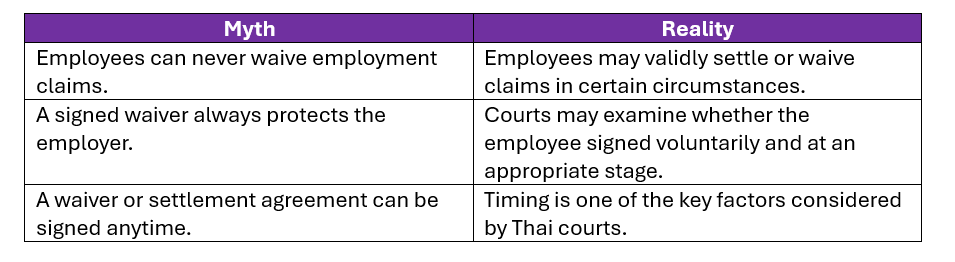
Myth vs Reality

Many employers assume that once an employee signs a waiver or settlement agreement, the company is fully protected from any future employment claims. However, the legal position under Thai law is more nuanced. The enforceability of such agreements depends not only on their wording, but also on the circumstances in which they are executed. Before examining the relevant legal principles, it is useful to address some common misconceptions.


Why Does Timing Matter?

Thai labour law recognises that employees are generally in a weaker bargaining position during the course of employment. Accordingly, the courts have been reluctant to uphold agreements whereby employees waive statutory employment rights while the employment relationship remains ongoing.

However, once an employee has been informed of the termination or the employment relationship has ended, the employee may have greater freedom to negotiate and voluntarily settle potential claims. As a result, Thai courts have adopted different approaches depending on when the waiver was executed.

Timing of Waiver of Employment Claims Based on The Supreme Court Judgments