In May, we explored how leadership must evolve in Gen AI. This month, I want to shift our focus to something equally fundamental but often ignored in transformation conversations: process. It's not technology, platforms, or automation. It's just a simple, clear human process, the way work actually happens, from the ground up.

Filter insights by:
Showing 16 of 215 content results
The Thai Revenue Department (“TRD”) has announced the Emergency Decree on Top-up Tax, B.E. 2567 (2024) (“Top-up Tax Law”), which will be effective from January 1, 2025. Below is a summary of the key aspects of this law.
This tax news will be of interest to: Thai companies that are part of multinational enterprise (MNE) groups and engage in intercompany transactions. In our tax news, you will find a guide on how a company can deal with a transfer pricing (TP) audit. How to manage TP risks during the audit If the company faces one or more red flags according to our TP series Part 1: Potential Red Flags, the company needs to prepare for how to deal with the TP audit by the tax authority. To reduce the risk of TP adjustments during the TP audit, the following important steps should be taken:
Thailand’s Cabinet Approves Draft Financial Hub Act to Boost Global Investment To position Thailand as a key global financial hub, the Thai Cabinet approved the draft Financial Act on February 4, 2025, as proposed by the Ministry of Finance. This legislation seeks to attract foreign financial businesses to invest in Thailand, while simultaneously fostering the development of the nation’s financial industry, workforce, and infrastructure to meet international standards.
Fraud, theft, and other forms of wrongdoing present a major challenge for businesses in the information age. Whereas in earlier times, paper trails and physical evidence could often be relied upon to catch corporate criminals, the digital nature of both assets and spreadsheets allow would-be fraudsters to engage in more sophisticated levels of obfuscation. However, the same set of new technologies enables improved guardrails against such damaging activity. It is the responsibility of modern organisations to actively prevent fraud and theft from occurring within their ranks — either directly through internal procedures, or with the help of external specialists, or both.
The Revenue Department has announced the popular tax incentives scheme, now known as “Easy E-Receipt 2.0” (formerly “Shop Dee Mee Kuen”), which offers individual taxpayers up to THB 50,000 in personal income tax deductions for 2025. Your deductions for purchasing goods and services must be made between January 16, 2025, and February 28, 2025.
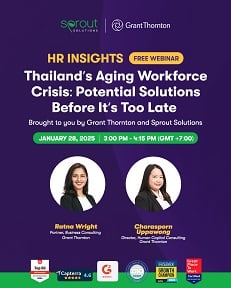
Thailand’s plummeting workforce is a multi-dimensional and critical crisis demanding immediate action from businesses.
How well do you really know internal control health check of your company ? How thoroughly are they checked when policies and procedures are updated? How do you ensure internal control efficiency is established and maintained? Are there any inefficiencies and control deficiencies your team has missed?
New technologies often create new markets that existing regulatory frameworks are not equipped to govern. Sometimes, these emerging markets are so novel that they create uncertainty or gaps in the tax system. The challenge for governments is to devise new tax rules that neither stifle the development of these markets nor create unfair tax loopholes. This is not an easy task.
Hiring decisions for senior level positions can save — or ruin — businesses in any industry. The right person for the job will have a clear vision of the opportunities and challenges ahead, the maturity to make wise decisions, the drive to dig deeper when the going gets tough, and the leadership qualities that will bring together a hard-working team to push forward.
A system that only works ‘well enough’ today will be far out of its depth tomorrow, as the rest of the industry optimises for greater speed, efficiency, and customer service quality. Because digital transformation/enablement takes time, companies cannot afford to wait until they are noticeably falling behind in order to upgrade their systems and processes.
A great idea is worthless without the funds to bring it to fruition. One of the most underappreciated responsibilities of business leaders is to ensure adequate liquidity for each new endeavour that their companies embark upon. This task requires great insight into company operations and market patterns, as well as an excellent sense of timing, as the necessary cash must be available at the precise moment the organisation needs to access it. Whether a business is a well-established company or a fast-growing start-up, this principle holds true. Even the most seasoned organisations can falter if liquidity management is neglected, just as newer companies can fail to get off the ground without the right financial planning.
Fraudulent activities committed by employees, managers, and even executives can severely damage a business both financially and reputationally. The scope of this problem is typically underestimated, as the idea of team members stealing from the team is unpleasant to consider, much less to discuss out loud. The resulting silence surrounding this issue leads many to assume that it must not be a common problem.
Left unchecked, all things fall into disorder. This universal law requires that we maintain high standards of maintenance and organisation in all aspects of both life and business. As soon as we allow ourselves slack in any area, the deterioration process will begin anew.
Explore some of the latest trends, best practices, and strategies that are shaping the future of Human Resources. Whether you're an HR professional or simply interested in the evolving landscape of the workforce, this webinar is for you. This webinar will explore FutureLog’s payroll transformation journey.
Privately held companies have more freedom to innovate than public companies as they are not beholden to shareholders who demand constant growth.